





Monday to Sunday: 8:00–18:00
|
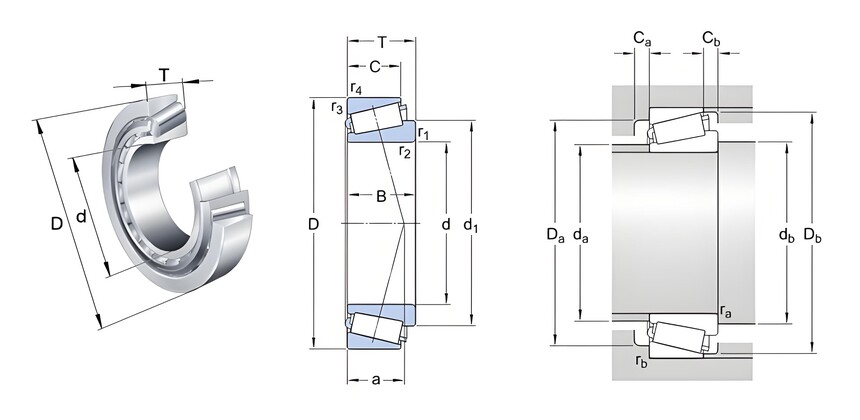
Imperial tapered roller bearingsHigh Load Capacity and High Rigidity Capable of withstanding very high radial loads and unidirectional axial loads; typically installed in pairs. Low Friction The end faces and flanges of the rollers have been optimized to reduce friction. Long Service Life The bearings have a high rated load capacity, which extends their service life. Rigid Bearing Applications A single-row tapered roller bearing typically requires pairing with another tapered roller bearing and adjustment before use. By applying preload, rigid bearing applications can be achieved. 
Collect
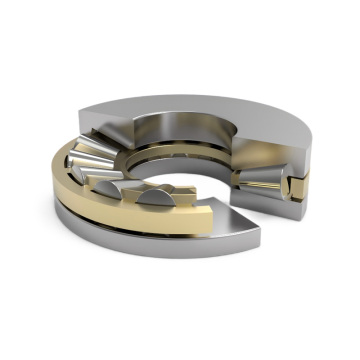
Tapered roller bearings offer high load-carrying capacity and operating speeds. They utilize a stamped cage, which facilitates lubrication. As separable bearings, the outer ring and inner assembly are interchangeable. They feature low friction torque. In design, the raceways of the inner and outer rings, as well as the apexes of the rollers, converge at a single point on the bearing’s central axis. Tapered rollers are assembled into the bearing as rolling elements and are guided by the large flange of the inner ring. Tapered roller bearings are separable bearings; both the inner and outer rings have tapered raceways. The inner ring and a set of tapered rollers are enclosed by a cage to form an inner ring assembly, and the outer ring can be separated from the inner ring assembly. and the outer ring is interchangeable with the inner ring assembly. The bearing is designed to accommodate combined loads—that is, simultaneous radial and axial loads—and features high load-carrying capacity and operating speeds. It utilizes a stamped window-type cage, which facilitates bearing lubrication. The extensions of the raceways intersect at a single point on the bearing axis to achieve true rolling, resulting in low friction torque during operation. The axial load capacity of tapered roller bearings increases as the contact angle increases. The size of the contact angle is related to the calculation coefficient; the higher the value, the larger the contact angle. They can withstand radial loads as well as unidirectional axial loads. When a load acts on the bearing, it generates an axial component; therefore, similar to angular contact ball bearings, they are generally used in pairs or in configurations such as double-row bearings. In such cases, the appropriate internal clearance can be set by adjusting the distance between the inner and outer rings. Based on the contact angle, they are classified into standard, medium, and large contact angle bearings. Based on the number of roller rows, they are further classified into double-row and four-row tapered roller bearings. Generally, stamped steel cages are used; for large-size tapered roller bearings, pin-type cages are also employed.
|